Logistics software development company and services for custom logistics software
A logistics software development company should price your dispatch board, warehouse system or customer tracking portal before you sign anything. In our model, a dispatch and delivery tracking web app costs $58,500 to $78,500 and takes 8 to 10 weeks, a custom warehouse management system with an ERP connection costs $63,000 to $90,000, and a driver app for iPhone and Android costs $71,000 to $84,000. You see your own range in about a minute.
No call, no card, no email needed to see your estimate.
Web app
Hours per feature
Typical range
$40,000 to $120,000
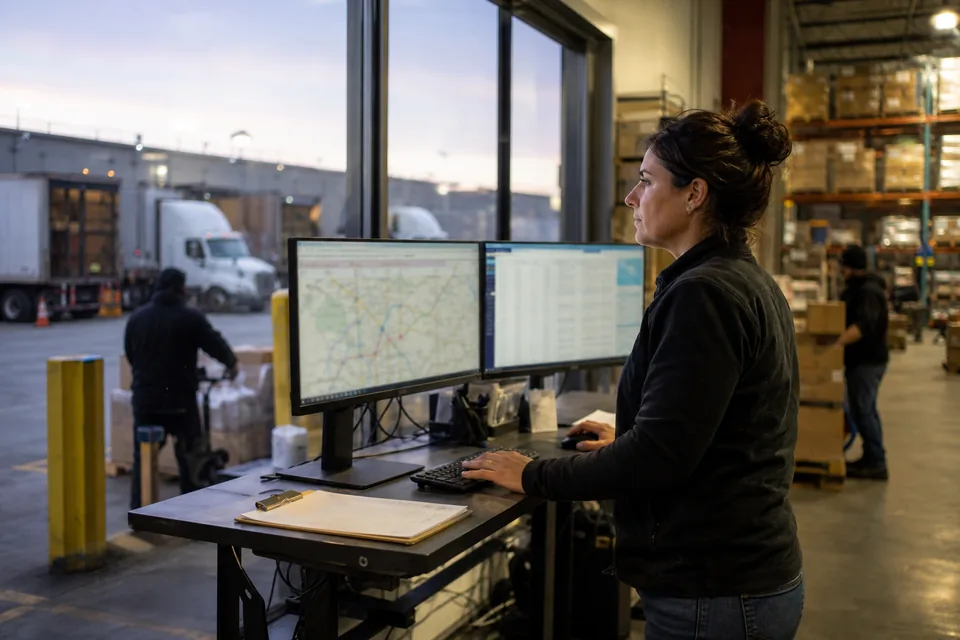
Custom logistics software we build, with model prices
Each row comes from the same estimate model you can run yourself, with the features listed. Every price includes design, QA and project management at $89 per hour of team time.
- Dispatch and delivery tracking web app
- Main featuresRoles for dispatchers and managers, live map, dashboard, reports, email alerts, one telematics or GPS feed
- Hours655 to 882
- Cost$58,500 to $78,500
- Timeline8 to 10 weeks
- Driver app, iPhone and Android
- Main featuresOne React Native codebase, route map, offline mode, push, proof of delivery photos
- Hours798 to 943
- Cost$71,000 to $84,000
- Timeline9 to 11 weeks
- Customer shipment tracking portal
- Main featuresCustomer accounts, shipment search, map, invoices, email updates, ERP connection
- Hours609 to 789
- Cost$54,000 to $70,000
- Timeline7 to 9 weeks
- Custom warehouse management system
- Main featuresRoles, inventory search, dashboard, reports, API, ERP and carrier connections
- Hours708 to 1,009
- Cost$63,000 to $90,000
- Timeline8 to 12 weeks
- Freight TMS for a broker or carrier
- Main featuresTeams, roles, load search, invoicing, dashboard, reports, ERP and load board connections
- Hours737 to 1,056
- Cost$65,500 to $94,000
- Timeline9 to 12 weeks
- Warehouse scanner app
- Main featuresHandheld or phone app with offline picking, item search and photo capture
- Hours774 to 896
- Cost$69,000 to $79,500
- Timeline9 to 10 weeks
- Integration only
- Main featuresConnect your WMS, TMS or ecommerce store to an ERP and one other system
- Hours139 to 232
- Cost$12,500 to $20,500
- Timeline3 to 4 weeks
- AI document capture
- Main featuresRead bills of lading and delivery receipts, search them, report on them, push data to your ERP
- Hours284 to 476
- Cost$25,500 to $42,500
- Timeline5 to 8 weeks
| What gets built | Main features | Hours | Cost | Timeline |
|---|---|---|---|---|
| Dispatch and delivery tracking web app | Roles for dispatchers and managers, live map, dashboard, reports, email alerts, one telematics or GPS feed | 655 to 882 | $58,500 to $78,500 | 8 to 10 weeks |
| Driver app, iPhone and Android | One React Native codebase, route map, offline mode, push, proof of delivery photos | 798 to 943 | $71,000 to $84,000 | 9 to 11 weeks |
| Customer shipment tracking portal | Customer accounts, shipment search, map, invoices, email updates, ERP connection | 609 to 789 | $54,000 to $70,000 | 7 to 9 weeks |
| Custom warehouse management system | Roles, inventory search, dashboard, reports, API, ERP and carrier connections | 708 to 1,009 | $63,000 to $90,000 | 8 to 12 weeks |
| Freight TMS for a broker or carrier | Teams, roles, load search, invoicing, dashboard, reports, ERP and load board connections | 737 to 1,056 | $65,500 to $94,000 | 9 to 12 weeks |
| Warehouse scanner app | Handheld or phone app with offline picking, item search and photo capture | 774 to 896 | $69,000 to $79,500 | 9 to 10 weeks |
| Integration only | Connect your WMS, TMS or ecommerce store to an ERP and one other system | 139 to 232 | $12,500 to $20,500 | 3 to 4 weeks |
| AI document capture | Read bills of lading and delivery receipts, search them, report on them, push data to your ERP | 284 to 476 | $25,500 to $42,500 | 5 to 8 weeks |
The ranges are model results, not quotes. Discovery confirms the scope and fixes the price of every later stage before you pay for it.
Why logistics teams build custom software instead of adding another subscription
Most freight brokers, 3PLs, distributors and private fleets already pay for a TMS, a WMS or both. The trouble starts when the way you actually work does not fit the vendor's screens: a custom pricing rule, a customer who wants their own portal, a dock process the WMS cannot model, or three systems that never agree on the same shipment. Custom logistics software development fixes the gap you can measure, and leaves the parts that already work alone.
- 01 Price before commitment. You see hours, team size, timeline and cost per feature before any meeting.
- 02 Stage payments. Discovery costs 10 percent of the estimate, at least $1,900. Design, build sprints and launch are each paid before they start, and you can stop after any of them.
- 03 Integrations priced one by one. Every connection to an ERP, carrier API, telematics feed or ecommerce store is a line in the estimate, 16 to 48 hours each, so you can see what each one costs.
- 04 Your code and your data. Everything is built in your repository and cloud account, and the rights transfer to you as each stage is paid.
- 05 Support after launch. The people who built it can stay on through a software maintenance and support plan.
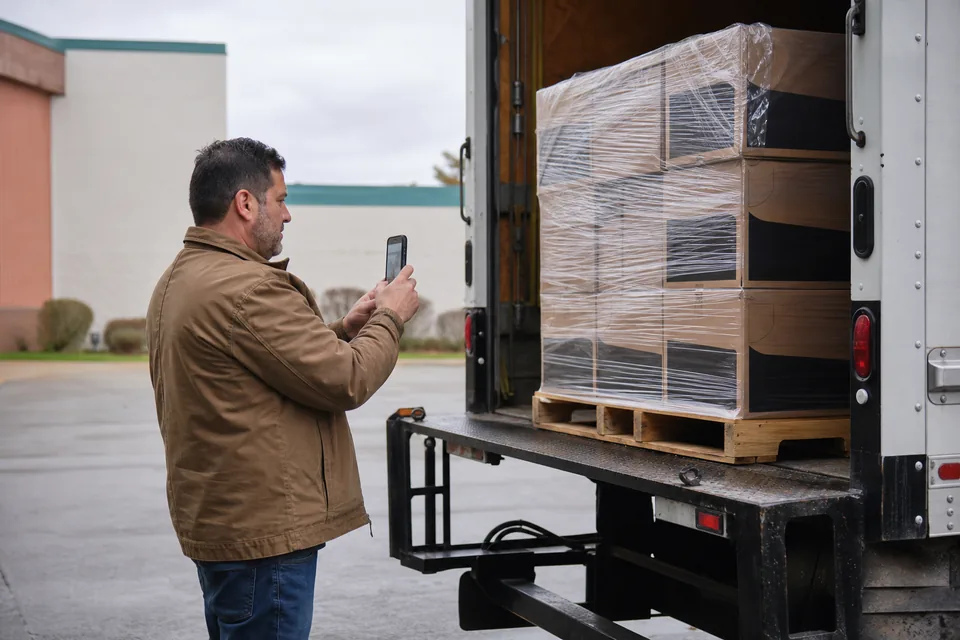
Logistics software development services we cover
- 01 Dispatch and fleet tools. Load assignment, driver status, live map views, exception alerts and daily reports for dispatchers and managers.
- 02 Driver and field apps. Cross-platform mobile apps with offline mode for dead zones, photo proof of delivery, signatures and push notifications.
- 03 Warehouse software. Receiving, putaway, picking and cycle count workflows, scanner apps and a WMS layer on top of your ERP inventory.
- 04 Transportation management. Quote and load records, carrier assignment, rate rules, invoicing and margin reports for brokers and carriers.
- 05 Customer portals. Shipment search, documents and invoices for your customers, so your team answers fewer status calls.
- 06 Integrations. Connections between your TMS, WMS, ERP, accounting system, ecommerce store and carrier APIs, built as custom software where off-the-shelf connectors stop.
- 07 AI on logistics paperwork. Data extraction from bills of lading, delivery receipts and carrier invoices through our AI development work.
How a logistics software project runs
-
01
Run the estimate. Pick the project type, the features and the systems you need to connect, and see the range in about a minute.
-
02
Discovery and scope, about one week. We map the workflow with your dispatchers or warehouse leads, write user stories and the data model, list every integration, and fix the price of each later stage.
-
03
Design, about two weeks. Screens for every role in scope, built around how your floor and office staff actually work, unless you bring your own designs.
-
04
Build in two week sprints. You click through a live build at the end of every sprint and can reorder the backlog between sprints.
-
05
Launch and handover. Production release, data migration from spreadsheets or the old system, documentation and the code in your account.
Who buys logistics software development from us
- 01 Freight brokers and carriers whose TMS cannot handle their pricing rules, customer requirements or margin reporting.
- 02 3PLs and distributors that need a client portal, a warehouse workflow their WMS does not support, or a scanner app tied to their ERP.
- 03 Companies running a private fleet that want dispatch, driver apps and delivery proof in one system instead of calls and spreadsheets.
- 04 Ecommerce and manufacturing operations that need orders, inventory and shipping connected without manual re-entry.
- 05 Logistics startups building a new platform, which can start lean with our software development for startups model.
Custom logistics software, an off-the-shelf TMS or WMS, or a mix
- Fit to your workflow
- Custom buildBuilt around it
- Off-the-shelf TMS or WMSYou adapt to the vendor
- Off-the-shelf plus custom layerVendor core, custom where it breaks
- Upfront cost
- Custom buildHighest, priced per stage
- Off-the-shelf TMS or WMSSetup and implementation fees
- Off-the-shelf plus custom layerIntegration and module cost
- Ongoing cost
- Custom buildHosting plus optional maintenance
- Off-the-shelf TMS or WMSPer user or per order fees that grow with you
- Off-the-shelf plus custom layerBoth, smaller custom part
- Who owns the code
- Custom buildYou
- Off-the-shelf TMS or WMSThe vendor
- Off-the-shelf plus custom layerYou own the custom part
- Best for
- Custom buildUnusual processes or a product you sell
- Off-the-shelf TMS or WMSStandard workflows, fast start
- Off-the-shelf plus custom layerMost mid-size operations
| Custom build | Off-the-shelf TMS or WMS | Off-the-shelf plus custom layer | |
|---|---|---|---|
| Fit to your workflow | Built around it | You adapt to the vendor | Vendor core, custom where it breaks |
| Upfront cost | Highest, priced per stage | Setup and implementation fees | Integration and module cost |
| Ongoing cost | Hosting plus optional maintenance | Per user or per order fees that grow with you | Both, smaller custom part |
| Who owns the code | You | The vendor | You own the custom part |
| Best for | Unusual processes or a product you sell | Standard workflows, fast start | Most mid-size operations |
Off-the-shelf software wins when your process is standard and you need to run next month. A full custom build wins when the software is part of what you sell, or when per-seat fees at your size cost more than owning the code. For most mid-size operations, the cheapest answer is to keep the core TMS or WMS and build the portal, app or integration it lacks. The cost side of that decision is in custom software development cost, and the three year math for warehouses is in warehouse management system cost for a custom WMS.
Questions buyers ask a logistics software development company
In our model, a focused logistics tool costs $54,000 to $94,000. A customer tracking portal runs $54,000 to $70,000, a dispatch web app $58,500 to $78,500 and a freight TMS with two integrations $65,500 to $94,000. A single integration project starts at $12,500. Your own features set your own range in the calculator.
Most single-workflow logistics systems in our model take 7 to 12 weeks of build after a one week Discovery. An integration takes 3 to 4 weeks, a dispatch web app 8 to 10 weeks and a mobile driver app 9 to 11 weeks. Data migration and connections to older systems are the usual reasons a schedule grows.
Buy when your workflow matches what the vendor sells and per-user fees stay reasonable. Build when the software is a competitive edge, when you need a customer-facing product, or when you keep paying for workarounds. Many teams keep the vendor system and build only the missing portal, app or integration.
Yes. Each integration is a separate line in the estimate, 16 to 48 hours depending on the API and data mapping. Common targets are ERP and accounting systems such as NetSuite and QuickBooks, ecommerce platforms, carrier and load board APIs, and telematics or GPS feeds that expose an API.
No. We build driver and warehouse apps with offline mode, which adds 32 to 64 hours in the model. The app stores scans, photos and status changes on the device and syncs them when the connection returns.
You do. Everything is built in your repository and cloud account, and the rights to each stage transfer to you when that stage is paid. You can bring the system in-house or move maintenance to another team at any time.
Price your logistics software before your next planning meeting
Pick the workflow, the features and the systems to connect, and see the hours, team, timeline and cost in about a minute.